

This is the fifth post in our “What I Wish I Knew About Money as a Teen” series.
If you’ve had a chance to read our recent post on inflation, you now understand the importance of successful investing. But that then leads to another question: how exactly do you do it?
It seems like there is a never-ending barrage of market commentary—some video or article trying to pitch the 10 Best Stocks to Buy TODAY or saying that This Time is Different – Sell Now!
The idea of investing can be incredibly daunting. But would you believe me if I said that investing is actually quite simple?
Simple, that is, but not easy.
The reality is that most of your investment success (or failure) won’t be based on stock picking or timing. Rather, it will be guided by the habits and principles you choose to adopt. As you begin investing, let it be the principles—not the headlines—that guide you.
Principle #1: Consistency
Capturing exceptional investment returns over a lifetime is a lot like progress with physical fitness. Improvements are most likely to be made by showing up, day in and day out, not just by going on one good run. Being consistent is challenging, but it is ultimately what builds the momentum you need to succeed.
In investing, showing up every day means investing on a regular basis, regardless of the market being positive or negative. Routine investing allows you to dollar-cost-average, where you never fully buy at any market high or low. This can remove some of the emotion from participating in the stock market. Dollar-cost-averaging also forces you to approach investing as if it is a non-negotiable part of your budget.
Principle #2: Patience
Compound interest, as we’ve discussed previously, works best when uninterrupted. Impatience can lead to overtrading, eroding gains through trading costs and taxes. Impatience can also motivate performance chasing—purchasing the latest high-flying stocks in search of quick returns. Unfortunately, the recent best performers or prominent names in the market are often businesses that have already experienced much of their growth. See below for the performance of companies before and after joining the list of top 10 stocks within the United States:
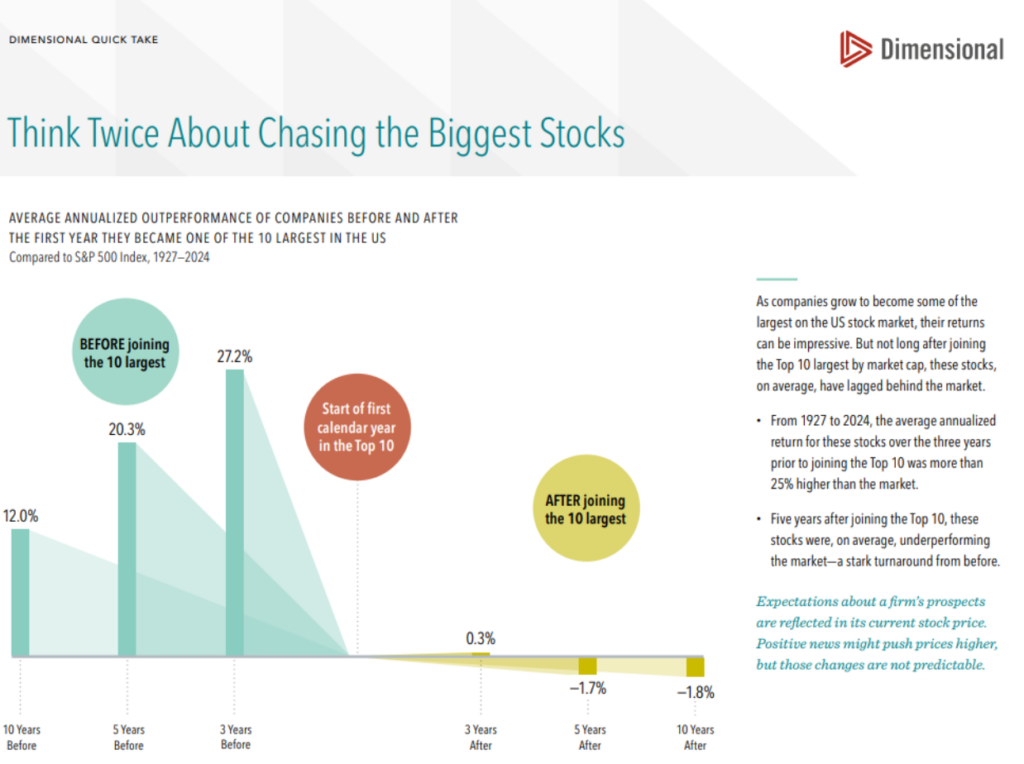
Source: https://my.dimensional.com/collections/dimensional-quick-takes
History supports patience, where the likelihood of a positive return grows with your investment time horizon. So, sit back, remain invested, and observe as your uninterrupted savings begin to do the heavy lifting for you.
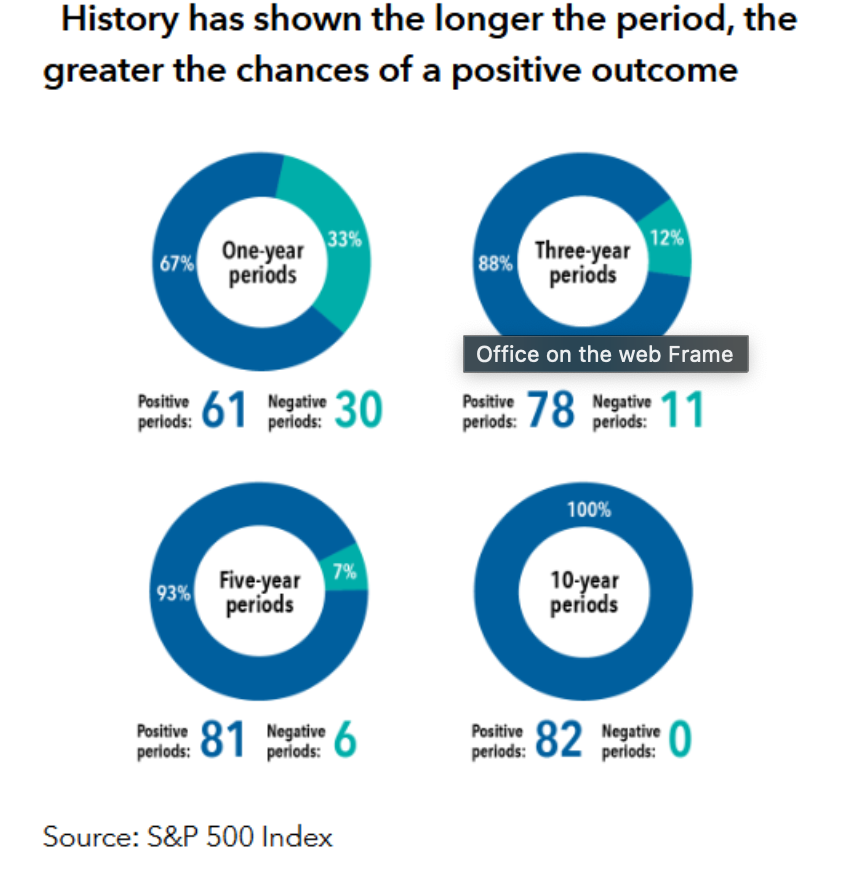
Image source: https://www.capitalgroup.com/individual/planning/investing-fundamentals/time-not-timing-is-what-matters.html
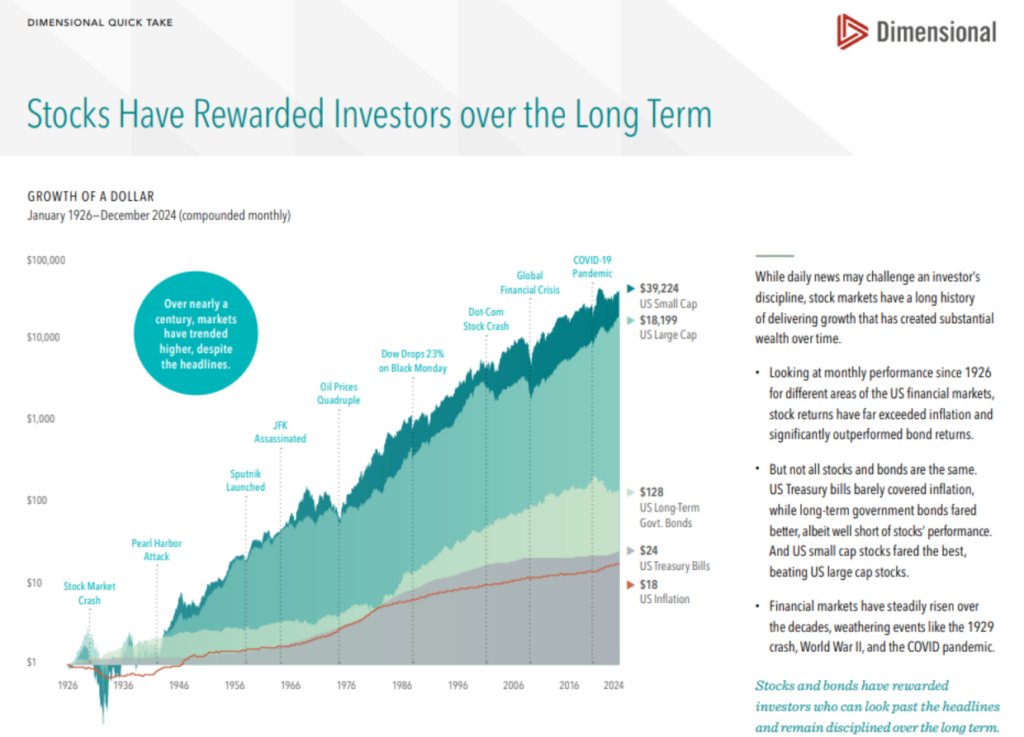
Source: https://my.dimensional.com/collections/dimensional-quick-takes
Principle #3: Staying Diversified
One of my favorite Warren Buffett quotes is: “Rule number one: Never lose money. Rule number two: Never forget rule number one.”
Part of being a good investor is learning about risk: the possibility of loss of your original investment. Risk comes in many forms, but one of those forms is over-concentration risk.
Imagine investing your entire savings into one company. If it outperforms, you get to watch your portfolio value skyrocket. But, if any number of negative outcomes occur instead, you could lose part of, if not your entire investment.
Thus, this is my last suggestion to you. Never leave yourself over-exposed to any one sector (banks, technology, health care), company size (large, mid, small), investment style (growth, blend, value), or country. Individual stocks gain and lose favor with the public over time. Some countries experience eye-popping returns for years, only to lag the market later.
In the 1980s, for example, the Japanese stock market was the place to be. It was the country investors had high confidence in, given recent returns. Yet the highs experienced in 1989 were not reached again until 2024. If solely purchasing Japanese investments through the Nikkei 225 Index, it would have taken 35 years just to break even.
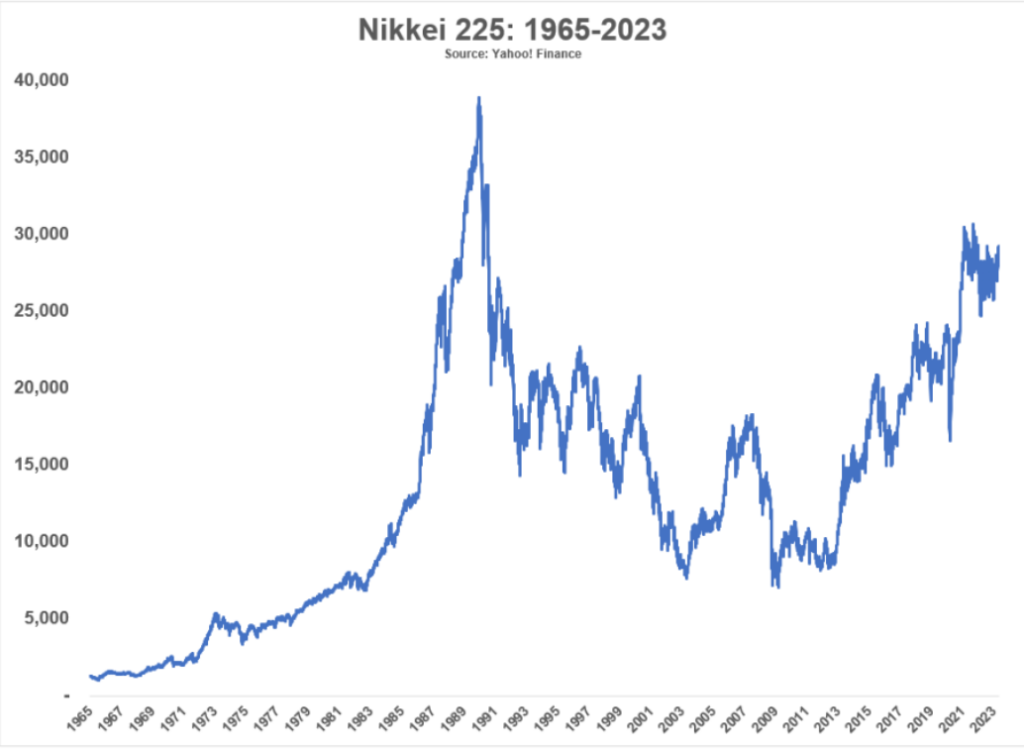
Graph source: https://awealthofcommonsense.com/2023/05/the-biggest-asset-bubble-in-history/
Rather than being overweight in one country, consider reducing the risk of your portfolio by purchasing diversified funds that spread your hard-earned cash across all markets, thereby protecting you from another 1980s scenario.
To be a good investor, there is a lot to learn. But if you can focus on being consistent, patient, and diversified, you will already be well on your way to reaching your goals.
It really is simple, but it’s not going to be easy. I wish I had known this sooner.
Read the Other Posts in This Series
- What I Wish I Knew About Money as a Teen
- How to Budget and Save Without Feeling Broke
- Building Credit and Managing Debt
- The Basics of Inflation